AWS Architecture Blog
Category: Intermediate (200)
Serverless vehicle tracking at scale: Bosch L.OS on AWS
Learn how Bosch Mobility Platform Solutions built L.OS, a serverless vehicle tracking platform on AWS that unifies India’s fragmented spot logistics market into a single real-time visibility layer using Amazon ECS, AWS Lambda, and Amazon MSK.
Track generative AI costs with Amazon Bedrock inference profiles
Learn how to track generative AI costs by department using Amazon Bedrock application inference profiles and AWS cost allocation tags. Create tagged profiles for each team and view per-department cost breakdowns in AWS Cost Explorer.
Reducing Text2SQL latency with parameterized query templates
Learn how parameterized query templates reduced Text2SQL latency by 80% and cut token consumption by over 50%. This post covers the architecture behind an intelligent caching layer that uses semantic similarity to match user questions to SQL templates, bypassing expensive LLM calls.
Dual-token authentication for Nakama game servers with Amazon Cognito on AWS
In this post, you learn how to configure an Amazon Cognito User Pool for SRP-based game client authentication with no client secret. You will implement a Go runtime hook that validates Cognito JWTs and bridges player identity to Nakama sessions.
How Samsung achieved real-time pricing with AWS Lambda Response Streaming
In this post, we walk through the legacy architecture challenges, the stateless streaming solution, key implementation patterns, and performance results—a pattern you can apply if you’re building high-traffic APIs that aggregate data from multiple backend sources.
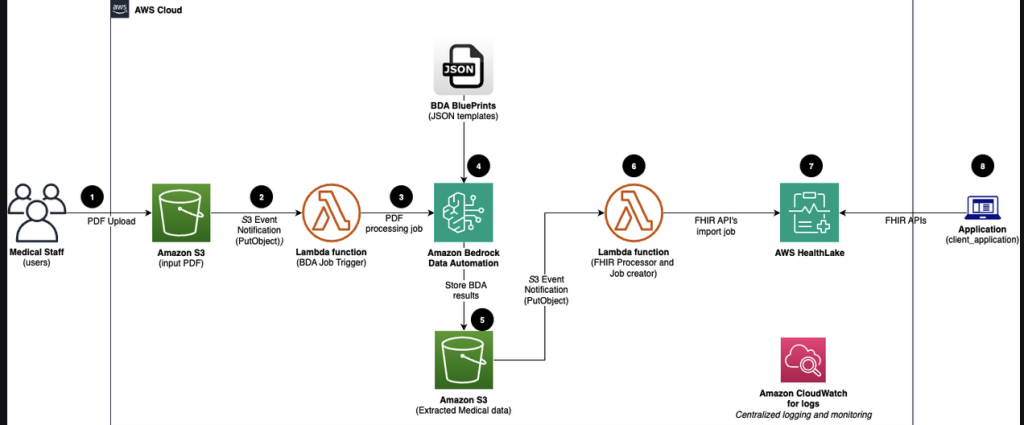
Automate medical record digitization with Amazon Bedrock Data Automation and AWS HealthLake
In this post, you learn how to build an automated, serverless pipeline that converts scanned PDF medical records into FHIR R4-compliant data using Amazon Bedrock Data Automation and AWS HealthLake. We walk through the architecture, explain how each AWS service connects to the next, show you what the pipeline looks like when it runs, and get you deployed in under 20 minutes.
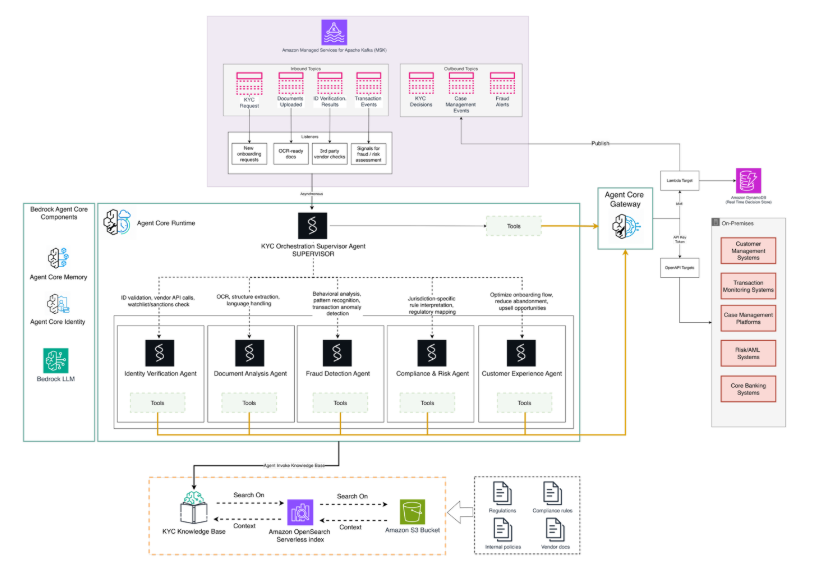
Modernizing KYC with AWS serverless solutions and agentic AI for financial services
This post extends IBM’s approach to real-time KYC validation using generative AI, as previously discussed in the post IBM Digital KYC on AWS uses Generative AI to transform Client Onboarding and KYC Operations. It transforms compliance operations through autonomous decision-making and intelligent automation using agentic AI, event-driven architecture, and AWS serverless services. The solution addresses the fundamental limitations of traditional rule-based systems. It provides autonomous decision-making, dynamic adaptation, and intelligent automation that transforms compliance operations.
Unlock efficient model deployment: Simplified Inference Operator setup on Amazon SageMaker HyperPod
In this post, we walk through the new installation experience, demonstrate three deployment methods (console, CLI, and Terraform), and show how features like multi-instance-type deployment and native node affinity give you fine-grained control over inference scheduling
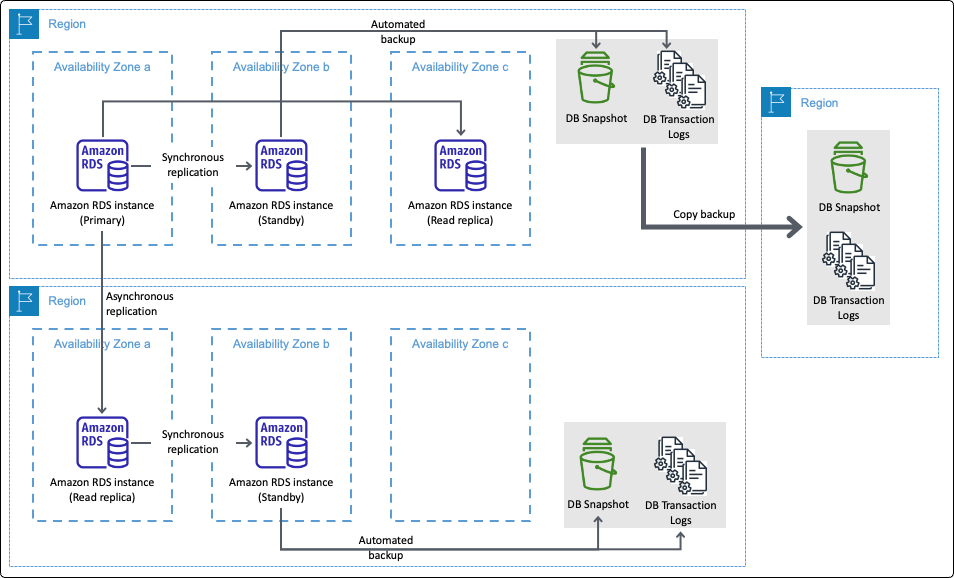
Streamlining access to powerful disaster recovery capabilities of AWS
In this blog post, we take a building blocks approach. Starting with the tools like AWS Backup to protect your data, we then add protection for Amazon Elastic Compute Cloud (Amazon EC2) compute using AWS Elastic Disaster Recovery (AWS DRS). Finally, we show how to use the full capabilities of AWS to restore your entire workload—data, infrastructure, networking, and configuration, using Arpio disaster recovery automation.
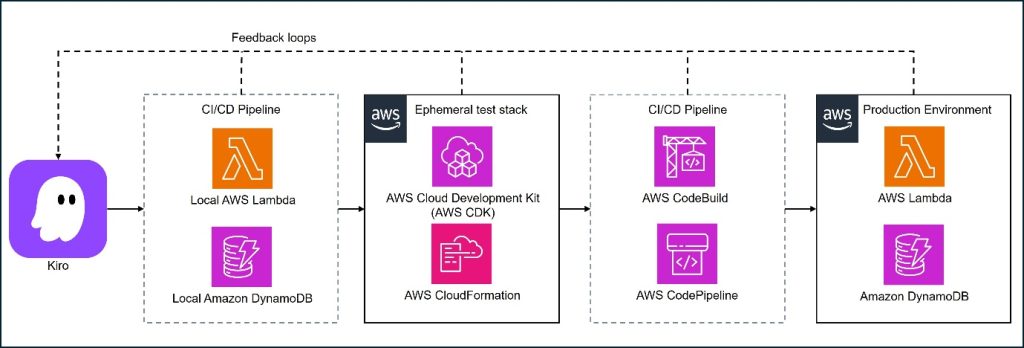
Architecting for agentic AI development on AWS
In this post, we demonstrate how to architect AWS systems that enable AI agents to iterate rapidly through design patterns for both system architecture and code base structure. We first examine the architectural problems that limit agentic development today. We then walk through system architecture patterns that support rapid experimentation, followed by codebase patterns that help AI agents understand, modify, and validate your applications with confidence.